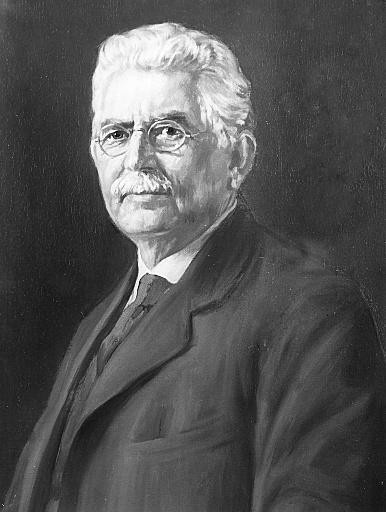
Robert Justus Kleberg Jr.
KLEBERG, ROBERT JUSTUS JR. (1853–1932), inducted between 1920–1936
Artist: Robert Wadsworth Grafton (1876–1936)
KLEBERG, ROBERT JUSTUS III (1896–1974), inducted 1959
Artist: Joseph Allworthy (1892–1991)
This father and son were operators of the King Ranch, a one-million-plus-acre cattle and horse ranch in South Texas. Robert Kleberg Jr. was an attorney who represented Captain Richard King, the founder of the ranch. When King died in 1885, Kleberg took over the management of the ranch, working with King’s widow. In 1886, he married their daughter. Kleberg was responsible for many improvements that made the ranch much more profitable: drilling for artesian water, fencing pastures, and extending railroad track through the land. He designed the first cattle dipping vats to combat the devastating Texas Fever Tick. During his tenure, the King Ranch became the largest cattle rail operation in the world. Kleberg was president of the Texas Cattle Raisers Association.
When his father’s health declined, Robert III, known as “Bob,” took over as head of ranch operations, and eventually, President and CEO. Over a thirty-year period, Bob Kleberg crossed Brahman bulls with British Shorthorn stock to produce the Santa Gertrudis, recognized as the first American breed of beef cattle and the first cattle breed to be recognized in the world in more than a century. Ranch operations expanded to herds in Australia, South America, and Cuba. The King Ranch horse legacy was solidified under his guidance as well, producing the number one registration in the American Quarter Horse Association Stud Book and Registry and the youngest horse ever inducted into the National Cutting Horse Association Hall of Fame. Thoroughbred stallions from the ranch produced the 1936 Kentucky Derby and Preakness winner, Bold Venture; the 1946 Triple Crown winner, Assault; and the 1950 Kentucky Derby and Belmont winner, Middleground.
Source: Saddle & Sirloin Guidebook 2026, p. 122