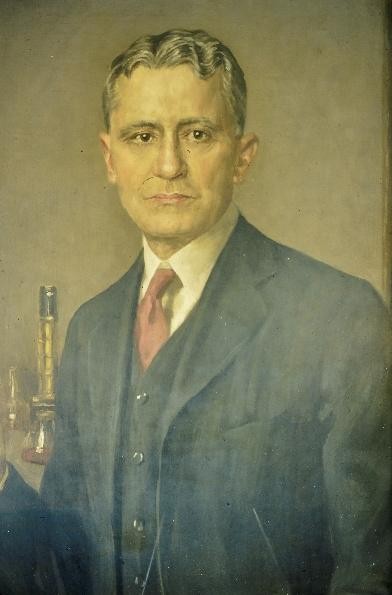
Artist: Robert Wadsworth Grafton (1876–1936)
Marion Dorset
DORSET, MARION (1872–1935), inducted by 1920
Marion Dorset, a gifted high school scholar, was admitted to the University of Tennessee as a second-year student. In 1894, he interrupted medical school at the University of Pennsylvania to accept a position as assistant chemist in the Biochemic Laboratory of the Bureau of Animal Industry, US Department of Agriculture. He attended night school, earning his medical degree from George Washington University in 1896. Iowa State College awarded an honorary degree of Doctor of Veterinary Medicine to him as well. In 1900, he was made assistant chief of the Biochemic Division at the USDA, advancing to chief four years later.
Dr. Dorset’s medical discoveries made a significant impact on the livestock industry. He determined the cause of hog cholera—a disease that was decimating swine populations in the US—and, in 1916, developed the serum to cure it. He supervised the nation-wide campaign to eradicate bovine tuberculosis and discovered the rapid method for detecting pullorum disease in chickens. Dorset also invented the purple ink inspection stamp to mark federally inspected meats. Dr. Marion Dorset was a fellow of the American Association for the Advancement of Science, an honorary member of the American Veterinary Medical Association, and was inducted into the National Agricultural Hall of Fame in 1989.
Source: Saddle & Sirloin Guidebook 2026, p. 82